
Key Takeaways
- Post-funeral rituals in Buddhism often continue for several weeks after the funeral ceremony.
- Families may observe prayers, offerings, and memorial services based on their Buddhist tradition.
- Ash collection, cremation or burial arrangements, and administrative matters are commonly completed after the funeral.
- Understanding the purpose of each ritual helps families prepare and participate with confidence.
- Choosing a Buddhist funeral package in Singapore can help coordinate post-funeral arrangements alongside the funeral ceremony itself.
Introduction
A Buddhist funeral does not conclude with the final farewell at the wake or cremation. For many families, several important rituals and practical responsibilities continue afterwards. These post-funeral practices honour the deceased, provide opportunities for remembrance, and reflect the family’s religious beliefs and traditions. While customs vary among different Buddhist communities, there are several common rituals that families may observe after the funeral. Understanding these practices also helps families know what to expect when working with providers of funeral services in Singapore.
Collecting the Ashes and Final Placement
If the deceased is cremated, the collection of ashes is usually one of the first steps after the funeral. The ashes may be collected on the same day or at an appointed time determined by the crematorium. Family members often attend this process together, sometimes accompanied by monks who conduct brief prayers before the ashes are placed into an urn.
The urn may then be kept at a temple, stored in a columbarium, or placed in a family burial plot where applicable. Some families may choose sea scattering or garden scattering if permitted and aligned with their wishes. The chosen resting place often becomes the location for future visits and memorial prayers.
Continuing Prayer Ceremonies
Many Buddhist traditions observe additional prayer services after the funeral. These ceremonies are commonly held on specific days, such as the seventh, forty-ninth, or one hundredth day following the person’s passing, although the exact schedule depends on the family’s religious tradition and guidance from monks.
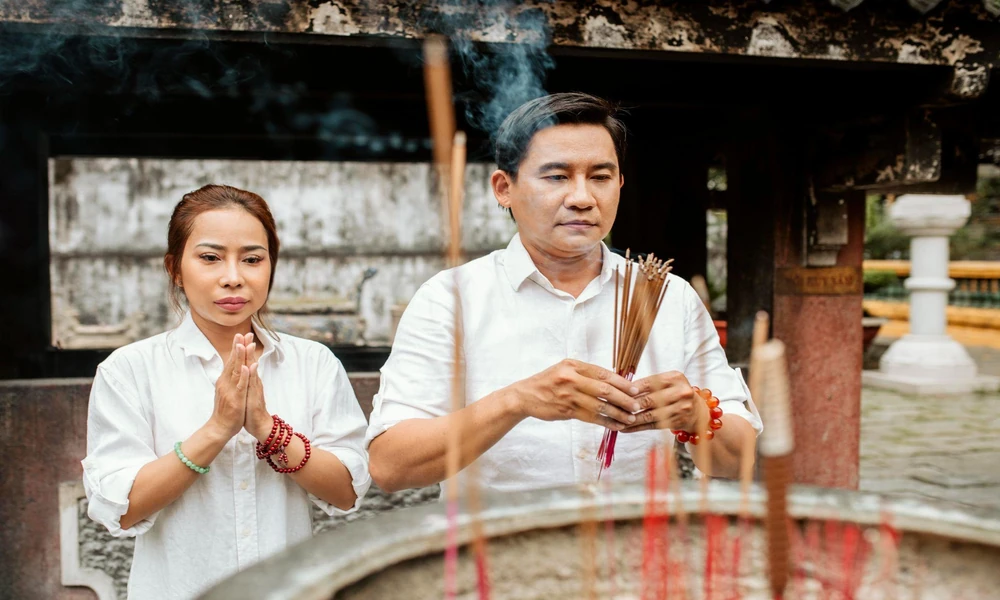
During these ceremonies, monks may chant sutras while family members make offerings of incense, flowers, fruits, and vegetarian food. These gatherings allow relatives and close friends to remember the deceased while expressing gratitude and respect. The rituals also provide an opportunity for families to come together during the mourning period.
Memorial Offerings and Acts of Merit
Acts of merit are an important aspect of many Buddhist traditions. Families may perform charitable donations, offer food to monks, sponsor temple activities, or contribute to community causes in memory of the deceased. These acts are viewed as meaningful ways to honour the person’s life while reflecting Buddhist values of generosity and compassion.
Some households also maintain a temporary altar where incense, candles, flowers, and food offerings are presented during the mourning period. These practices vary between families, and the duration of the altar’s use often depends on cultural customs and religious guidance.
Observing the Mourning Period
The mourning period extends beyond the funeral itself. During this time, some families follow certain customs, such as wearing mourning attire for a designated period, avoiding festive celebrations, or limiting participation in major social events. The length and observance of mourning differ according to family traditions, cultural background, and the advice provided by religious leaders.
The mourning period also gives family members time to adjust emotionally while maintaining meaningful remembrance of the deceased. Memorial photographs, regular visits to the resting place, and participation in annual remembrance ceremonies are common ways families continue honouring their loved one.
Completing Administrative Responsibilities
Alongside religious observances, families also need to complete several practical matters after the funeral. These may include handling financial accounts, notifying relevant organisations, managing insurance claims, updating legal documents, and settling estate matters where applicable.
Many providers offering funeral services assist families by explaining the immediate administrative requirements following the funeral. While legal and financial matters are generally managed separately, having guidance during this period can reduce confusion and help families focus on supporting one another.
Planning Ahead for Future Needs
Experiencing the funeral process often encourages families to discuss future funeral planning for themselves or other relatives. Understanding the sequence of ceremonies, memorial services, and post-funeral responsibilities allows families to make more informed decisions in advance.
Selecting a Buddhist funeral package in Singapore can provide clarity on both the funeral arrangements and the support available afterwards. Families may also discuss religious preferences, memorial service schedules, and final resting place options ahead of time to reduce uncertainty during future circumstances.
Conclusion
Post-funeral rituals remain an important part of Buddhist traditions, extending beyond the funeral ceremony itself. From collecting the ashes and conducting memorial prayers to performing acts of merit and completing practical responsibilities, these steps help families honour the deceased while navigating the mourning process. Understanding what happens after the funeral allows families to prepare for both the religious observances and administrative tasks that follow, making the entire journey more organised and meaningful.
Contact Casket FairPrice and receive guidance on the rituals, documentation, and support services that may be required before, during, and after the funeral.