
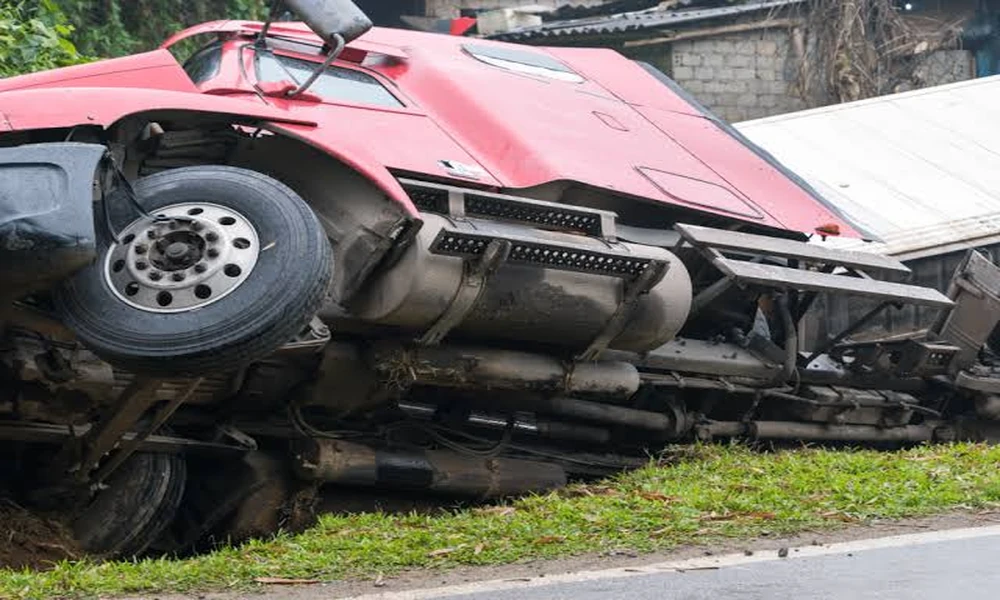
Most evidence from a truck crash dies quietly. The dashcam loop overwrites itself in a week. The electronic logging device retains driver-hours records for a few months at most before the carrier’s retention policy rolls them off. Meanwhile, the negotiations crawl, and somebody’s attorney is still drafting demand letters.
That gap between the crash date and the first real evidence request is where strong claims fall apart. Not on a courtroom stage, not in front of a jury, but in the quiet weeks when nobody asked for the data. If you are handling a claim of your own, or you are just curious about how these cases work, the failure pattern repeats. A firm like this truck accident lawyer in Atlanta GA sees it in case files every month: the same missing dashcam, the same overwritten trip log, the same carrier that “can’t locate” documents a month after they were routine.
So I want to walk through the mechanics. What actually gets preserved, what gets lost, and how an evidence chain is built long before a case is filed. Not a legal primer. More like a field guide to the parts of the process that surprise people.
What Does a Truck Carrier Actually Track, and Why Does It Matter?
Commercial trucks are among the most instrumented vehicles on the road. The engine control module logs speed, braking, throttle, and idle. A telematics unit streams GPS pings. The driver’s electronic log, mandated under federal hours-of-service rules, timestamps every shift. That means a crash involving one of these vehicles leaves a trail that is, in theory, far richer than anything a passenger car produces.
In practice, “in theory” is doing heavy lifting. Carriers configure retention windows for cost reasons. A fleet of 300 trucks can’t keep 8 years of sensor data sitting on a server without paying for it. Most retention policies fall somewhere between a couple of weeks and a few months, and the federal government’s own published rules federal regulations spell out minimums for some records but not all. So preservation letters and spoliation letters exist precisely because nobody trusts the default schedule.
I’ve read enough crash narratives to have an opinion here: the data itself is rarely the problem. The problem is that nobody on the injured party’s side asks for it on day three. They ask on day ninety, and by then the truck has been sold, the ECM has been reflashed, and the telematics vendor’s contract has rolled the crash week out of the archive.
The Three Things That Decide a Freight Claim
Who was the driver working for at that exact hour?
This sounds obvious, but the driver at the wheel is frequently not the driver on the paperwork. Thousands of commercial vehicles in the U.S. are operated by independent contractors under lease agreements with the carrier on the door. That matters because the named defendant and the insurance coverage both change depending on the lease language. A lean, disorganized claim pleads the wrong party and spends weeks fixing it.
Whose GPS location records contradict the timeline?
Now here’s the part I find most useful. Two records usually exist in parallel for the same trip: the truck’s own telematics, and whatever third-party system tracked the load. That second stream, shipper dispatch or broker tracking, is a witness that belongs to neither the carrier nor the driver. Attorneys who collect both often find the two disagree in useful ways. Attorneys who collect only the carrier’s copy often find it conveniently incomplete.
Who maintained that specific vehicle, on what schedule?
Brake, tire, and inspection records are normally kept in a maintenance file that the carrier also controls. Those records are frequently misfiled. Preserving them requires the same diligence as preserving the truck’s telemetry.
How a Claim Falls Apart in the First Ninety Days
Here’s the shape I would use if you asked me to map the failure. Call it the Three-Week Window. Roughly 21 days after a crash, four categories of evidence are most vulnerable: driver statements in their freshest form, surveillance footage from nearby cameras (businesses and traffic systems typically overwrite older footage within a month), the truck’s own telematics logs, and the full maintenance record. After that window, every remaining record has to be reconstructed, and reconstruction is expensive and imperfect.
So the practical move is simple: send a written preservation demand within a few days of the crash. Copy the carrier, the broker, the shipper, and the driver’s leasing company. Note that the trucking industry’s own compliance stack depends on structured recordkeeping, so a properly framed preservation letter usually prompts a fast response even before a lawsuit is filed. If it doesn’t, that refusal itself is evidence the carrier had reason to keep the file.
A Sample Preservation Checklist
- Dashcam footage, interior and exterior, including forward-facing and driver-facing streams
- Electronic logging device records for the driver’s current and prior shifts
- Telematics GPS pings for the 48 hours before the crash
- Truck maintenance file, including pre-trip inspection sheets
- Carrier’s safety management system flags and any Compliance, Safety, Accountability scores
- Driver qualification file, including prior employment verification
- Bills of lading, shipping manifests, and load routing documents
None of that is glamorous. It’s paperwork, and paperwork wins these cases.
What Do Judges Actually Care About in These Cases?
Judges care about preservation orders and spoliation sanctions more than most people realize. If the plaintiff can show that a party destroyed records after being placed on notice, courts can sanction that party, occasionally by instructing the jury that the destroyed evidence would have been unfavorable to the party who destroyed it.
That is a powerful instruction, and it only exists because the injured party preserved the possibility of it. Courts also care about how well-organized the evidence chain is. A clean chain of custody, with dated requests and dated responses, is more persuasive than a pile of reconstructed files delivered in week eighty.
I’ll say it directly: the record-keeping discipline that makes these claims work is not a legal skill. It’s an operations skill. That’s why firms that handle commercial-vehicle crashes successfully tend to have paralegals and investigators who can read a freight dispatch log and flag what’s missing.
Two Mistakes to Stop Making
First mistake: waiting to hear back from the insurer before sending preservation letters. Insurers respond on their own timeline, and their timeline usually depends on the size of the claim.
Second mistake: assuming a truck driver’s own written statement is neutral. It isn’t. Anything the driver says or writes about hours, fatigue, or distraction is useful evidence, but only if somebody captures it before the driver has had a chance to consult anyone.
For census and demographic context on commercial vehicle traffic, you can check the U.S. Census Bureau data on freight movement and truck counts. Use those numbers when framing the risk of an overweight or poorly inspected vehicle if you need to argue that the trucking lane is inherently higher-risk.
The Truck Sold in Week Six
Here’s the scenario that should stick in your head. The tractor was sold to a reseller at the end of the calendar month. The reseller then sold it to another fleet two weeks later. By the time a preservation letter reached the original owner, the truck lived three states away and had a fresh ECM flash and a new driver’s preferences plugged in. Nobody destroyed evidence on purpose. The record simply evaporated through commerce. That’s more common than the dramatic “shredded documents” version of events.
When you’re building a case, that’s the clock you’re racing. The truck itself is the most perishable piece of it. If a claimant has not asked for the truck to be quarantined within days, the vehicle’s data history can vanish in ordinary business operations, and rebuilding it later costs far more than preventing the loss.
One more thing worth noting: the technical standards around electronic health records and data integrity were developed in part by the National Institute of Standards and Technology for far less consequential systems than crash logs. That’s not directly applicable to trucking claims, but it does confirm that the record-keeping discipline required in trucking cases is not unusual. Every industry with liability exposure has had to build these systems, and the trucking industry has, on paper at least.
So What Do You Do First?
Send the preservation letter. Then send a second letter to confirm receipt. Then keep a dated log of every response, non-response, and partial compliance. The worst thing you can do is wait for the insurance adjuster to be reasonable. They aren’t, and by the time you’ve figured that out, the dashcam loop has already overwritten itself.
Which raises a useful question. If your own insurance carrier or broker never told you that commercial truck data evaporates in weeks, would you have asked for it? Most people don’t. Most people who handle their own claim after a truck crash are arguing with an insurer by the time they realize the truck’s sensor history was the case. Here’s the takeaway I’d leave you with: whoever gets to the truck first gets the strongest version of the story. Make sure that’s you.