
What does a parterapeut do, and is it worth seeing one?
A parterapeut is a trained professional who helps couples understand the patterns that keep them stuck, communicate more honestly and rebuild closeness. You do not need to be on the brink of separation to benefit. Many couples go simply because they want things to feel better.
You are both sitting in the car outside the restaurant, engine off, neither of you moving. The evening was meant to be a fresh start. Instead, a small remark on the drive over has turned into a silence so thick that going in feels pointless. One of you stares at the dashboard. The other studies the rain on the window. You each know exactly what you would say if the other would only listen, and you each suspect the other is thinking the same.
If that moment is familiar, you are not a failing couple. You are a couple that has run out of ways to reach each other, and that is a very different thing.
The Pattern: Same Conversation, Different Day
Most couples do not argue about a hundred different issues. They have one or two core conversations, which return in many disguises.
- The topic changes, the feeling does not. Whether it is chores, money or weekend plans, each of you ends up feeling criticised, ignored or not good enough.
- Each person defends their corner. You explain, justify and counter, because being misunderstood feels unbearable.
- Nobody hears the need underneath. Behind “You never help” lies “I feel alone.” Behind “You’re nagging” lies “I feel like I can’t get it right.”
- The argument ends without resolution. It simply runs out of energy, leaving distance behind.
- The distance feeds the next round. Less warmth makes the next disagreement sharper.
Friends and family often offer advice, but it rarely helps, because they hear only one side and the pattern lives between the two of you.
The Shift: From Trying Harder to Getting a Third Perspective
The crucial change is to stop trying to solve the problem from inside it. Couples who are caught in a cycle usually do not lack love or effort. They lack distance from the pattern, and a calm space in which each person can be heard without interruption.
That is what a parterapeut provides. They are not a judge, and they will not decide who is right. Instead, they slow the conversation down, notice the pattern as it unfolds and help each of you say what is really going on beneath the frustration. When your partner hears “I get anxious and shut down because I’m afraid of disappointing you,” rather than “I don’t care,” something softens.
A good parterapeut typically helps you to:
- See the cycle you share, rather than blaming each other
- Express vulnerable feelings without attack or withdrawal
- Listen in a way that makes your partner feel understood
- Practise new responses in the room, so they are easier at home
- Rebuild trust, warmth and a sense of being on the same team
It is not about dredging up the past endlessly. It is about changing what happens between you now.
Four Things to Try Before Your First Session
None of these replaces professional support, but each can begin to ease the atmosphere.
- Name the pattern, not the person. In a tense moment, try “We’re doing it again” instead of “You’re doing it again.” It puts you on the same side.
- Take a proper pause. If either of you is overwhelmed, say “I want to continue this, but I need twenty minutes,” then genuinely return to the conversation.
- Lead with the softer feeling. Swap “You never listen” for “I miss feeling close to you.” It invites a very different response.
- Protect ten minutes a day. No phones, no problem-solving. Simply ask, “How are you really?” and listen.
If these steps keep collapsing into the old argument, that is useful information, not failure. It may be time to consider contacting a parterapeut.
Perspective, Encouragement and Hope
Seeking help is not a sign that your relationship has failed. More often, it is a sign that you both still care enough to try. Many couples describe their first session with a mixture of nerves and relief: nerves about saying difficult things aloud, relief at finally not carrying them alone.
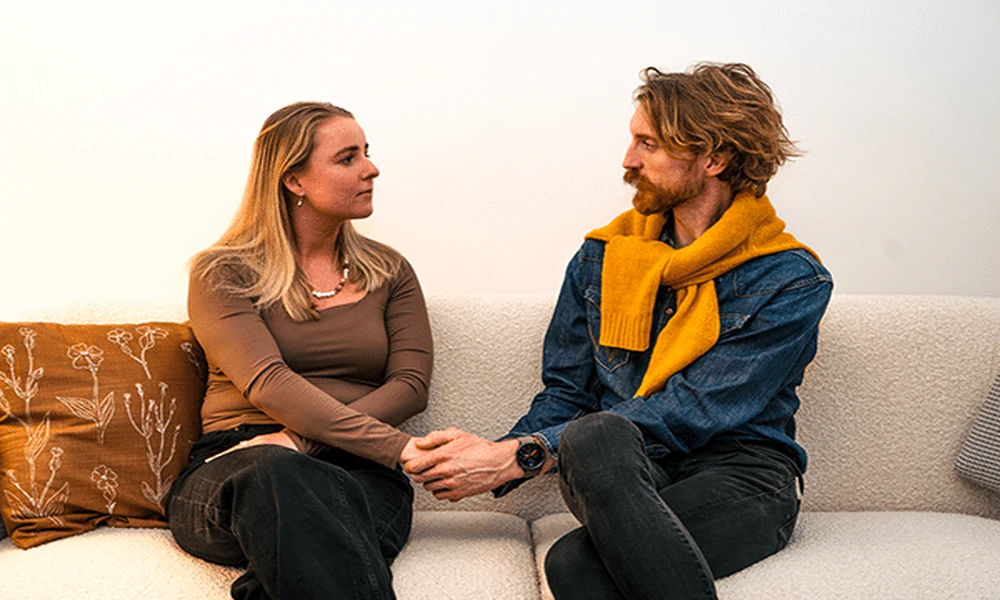
Change usually arrives quietly. An argument ends in minutes rather than days. A hand is reached for across the sofa. You realise you have said something honest and been met with kindness, and the evening carries on.
There will be good weeks and harder ones, and a setback does not undo what you have built. What matters is that you keep turning towards each other.
If you are sitting in that parked car, unsure whether to go in, consider this: the evening is not lost, and neither is the relationship. With patience, honesty and the support of a good parterapeut, you can find your way back to each other, one conversation at a time.